Introduction
Giant otters in Manu National Park are one of the most fascinating and intelligent mammals of the Peruvian Amazon rainforest.
Often called the “river wolf,” this species lives in remote and pristine environments, where it has developed strong social bonds, complex communication, and impressive hunting skills.
Unlike most solitary predators, giant otters live in highly organized family groups, working together to hunt, raise their young, and defend their territory. Observing them in the wild is not just a wildlife encounter — it is a unique opportunity to witness one of the most dynamic and social species in the Amazon.
For travelers visiting Manu National Park, seeing giant otters in their natural habitat is truly an unforgettable experience
Giant otters in Manu National Park are one of the top wildlife highlights for travelers visiting the Peruvian Amazon.
Social Behavior : A True Amazon Family
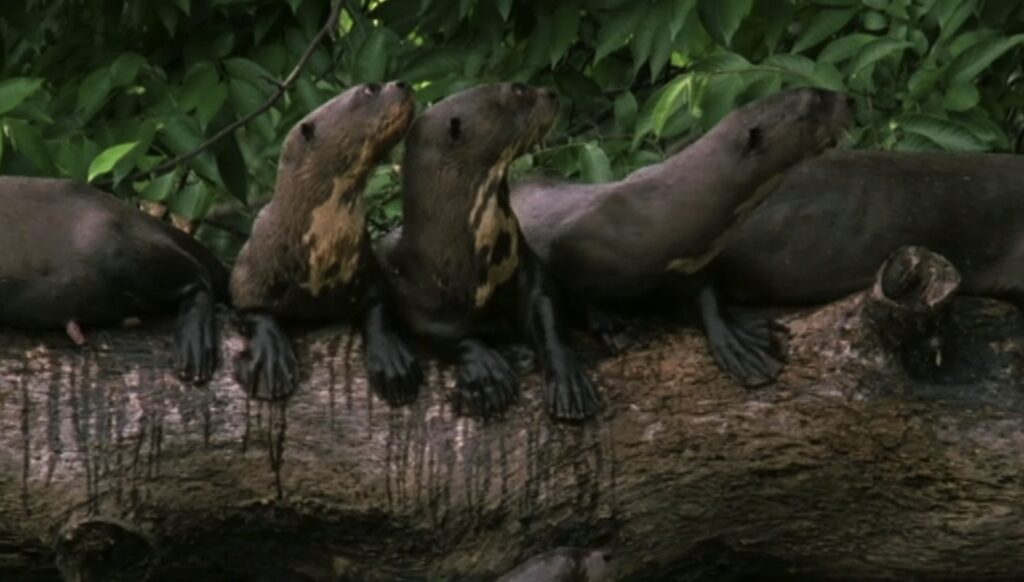
Giant otters are highly social animals that live in well-organized family groups of 4 to 10 individuals. Each group is led by a dominant breeding pair, while the rest of the members help care for the young, hunt, and defend their territory.
This cooperative behavior is essential for survival in the Amazon. Unlike solitary predators, giant otters rely on teamwork, communication, and strong social bonds to thrive in their environment.
Their family structure is stable and territorial, meaning each group occupies a specific area and actively protects it from intruders.
Diet: Masters of the River
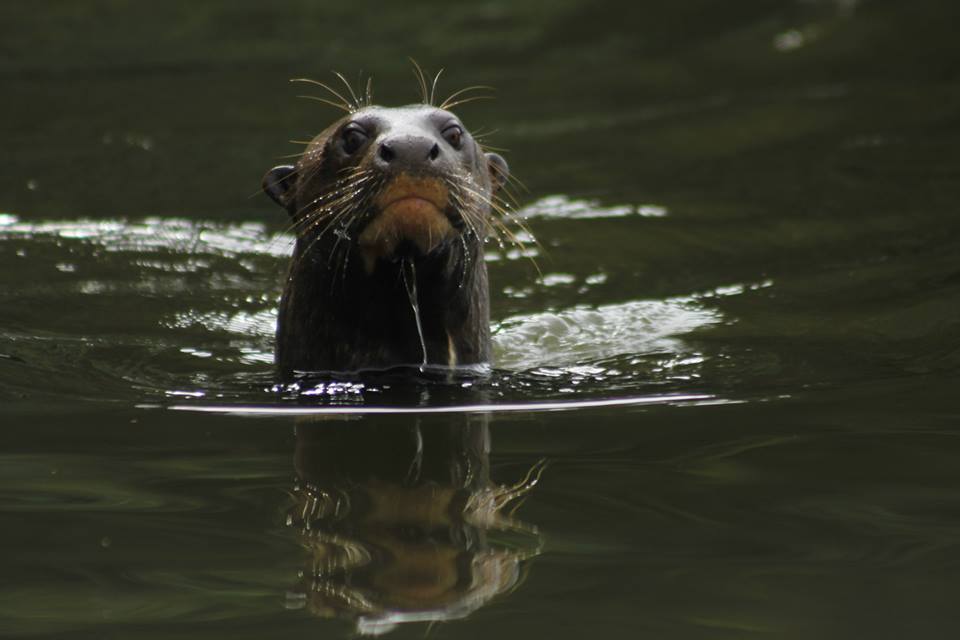
Giant otters are powerful aquatic predators with a diet mainly composed of fish. An adult giant otter can consume between 2.5 to 4 kilograms of fish per day, depending on availability and activity level.
Their preferred prey includes slow-moving fish such as catfish and characins, but they are also capable of catching faster species thanks to their speed, agility, and excellent coordination underwater.
Unlike many other predators, giant otters hunt cooperatively. Family members work together to herd fish into shallow areas, making them easier to catch. This teamwork increases their hunting success and reinforces social bonds within the group.
Reproduction and Life Cycle
Giant otters have a highly structured reproductive system centered around the dominant pair of the group. Usually, only the alpha male and female reproduce, while the rest of the family helps raise the young.
After a gestation period of approximately 65 to 70 days, the female gives birth to 1 to 5 pups in a den located near the riverbank. These dens are carefully chosen to provide safety from predators and environmental conditions.
Newborn pups are born blind and completely dependent on their parents. During the first weeks of life, they remain hidden in the den while the group brings food and protects them.
At around 2 months of age, the pups begin to swim and learn essential survival skills such as fishing and communication. This learning process is guided by the entire group, making giant otters one of the most cooperative mammals in the Amazon.
FAMILY BONDS
The survival of giant otter pups depends entirely on teamwork. Older siblings often act as “babysitters,” helping protect and teach the young. This strong family structure increases the chances of survival in the wild and highlights the importance of social cooperation in their species.
“Watching a giant otter family with pups is a rare and unforgettable experience in Manu National Park.”
Conservation Status: Why Giant Otters Are Endangered
The giant otter is currently classified as Endangered due to a combination of historical and ongoing threats. Once widespread across South America, its population has dramatically declined over the past century.
One of the main causes of this decline was intense hunting for their fur during the 20th century. Giant otter pelts were highly valued in the fashion industry, leading to massive population losses in countries like Peru, Brazil, and Colombia.
Although commercial hunting has decreased, giant otters still face serious threats today, including habitat destruction, illegal mining, water pollution, and human disturbance.
Rivers contaminated by mercury from gold mining directly affect their health and reduce fish populations, which are their main food source. Additionally, deforestation and increasing tourism pressure can disrupt their sensitive social behavior.
MAIN THREATS
* Illegal gold mining and mercury pollution
* Habitat destruction (deforestation)
* Conflict with fishermen
* Disturbance from uncontrolled tourism
* Reduction of fish populations
CONSERVATION EFFORTS
Despite these challenges, conservation programs and protected areas like Manu National Park play a crucial role in the survival of giant otters.
Strict regulations, scientific research, and responsible tourism have helped stabilize some populations. Manu remains one of the best places in the world to observe giant otters in their natural habitat.
“By visiting Manu National Park responsibly, travelers directly contribute to the protection of giant otters and their fragile ecosystem.”
Where to See Giant Otters in Manu National Park
Seeing giant otters in Manu National Park is one of the most unique wildlife experiences in the Amazon rainforest. Watching a family swim, communicate, and hunt together offers a rare glimpse into one of the most intelligent and social species in the region.
In Manu National Park, these encounters happen in a natural and protected environment, far from crowds and human disturbance. Every sighting is authentic, unpredictable, and deeply memorable.
If you are passionate about wildlife and nature, observing giant otters in their natural habitat will be an experience you will never forget.
EXTRA
✔ Small group tours
✔ Expert local guides
✔ Wildlife-focused experiences
✔ Responsible tourism in Manu National Park
Experience Giant Otters in the Wild
Seeing giant otters in Manu National Park is a once-in-a-lifetime experience. Our guided tours take you deep into the Amazon, where you can observe these incredible animals in their natural habitat.
Join our Manu National Park tours and experience the Amazon like never before.